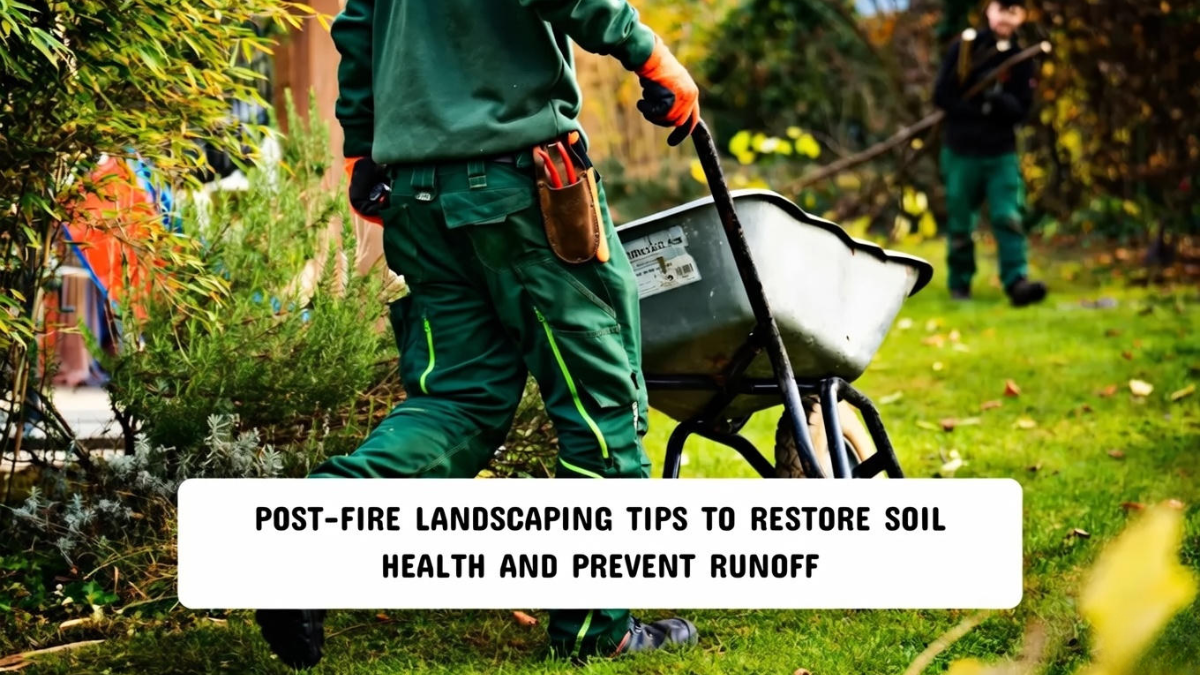
Wildfires don’t stop causing damage when the flames are extinguished. In many burned areas, the most destructive impacts come afterward, when rainfall triggers severe runoff, erosion, mudslides, and flooding. Without vegetation and healthy soil structure, even moderate rain can strip away topsoil, clog waterways with sediment, and threaten homes and infrastructure downhill. Post-fire landscaping is a critical recovery step that helps restore soil health, slow water movement, and reduce long-term environmental damage. When done correctly, it can make the difference between steady recovery and repeated disaster.
Why Burned Soil Becomes So Unstable After Fires
Wildfires remove vegetation, leaf litter, and organic matter that normally protect soil from rain. Roots that once anchored the ground decay or burn away, leaving soil loose and exposed. High-intensity fires can also heat the soil enough to create a water-repellent layer beneath the surface. This hydrophobic soil prevents rain from soaking in, forcing water to race downhill as runoff.
The result is a landscape that sheds water instead of absorbing it. This sudden runoff carries ash, sediment, rocks, and debris into streams and drainage systems, increasing flood risk and reducing water quality. The first rainy seasons after a fire are often the most dangerous, making early landscaping intervention essential.
Restore Ground Cover as Quickly as Possible
Re-establishing ground cover is the single most important step in post-fire landscaping. Plants protect soil by absorbing rainfall, slowing water movement, and binding soil with their roots. Even partial ground cover can significantly reduce erosion and runoff.

Fast-growing grasses and low-growing plants are especially valuable in the early stages of recovery. Native species are preferred because they are adapted to local soils, climate, and fire cycles. They establish more reliably, support wildlife, and reduce the risk of invasive species taking over burned areas.
Seeding should ideally be done before the rainy season so plants have time to establish roots. On steep or large areas, hydroseeding can be effective because it delivers seed, mulch, and soil binders in one application, improving seed contact with the soil and increasing germination success.
Use Mulch for Immediate Soil Protection
Because plants take time to grow, mulch plays a crucial role in protecting soil immediately after a fire. Straw, wood chips, or other organic mulch act as a temporary shield, reducing the impact of raindrops and slowing runoff across bare ground.
Mulch also traps sediment, keeps soil cooler, and retains moisture, which supports seed germination and microbial recovery. Over time, decomposing mulch adds organic matter back into the soil, improving structure and fertility. For best results, mulch should be weed-free and applied evenly, with anchoring methods used on slopes to prevent it from washing away.

Install Simple Erosion Control Structures
On slopes or areas with concentrated water flow, physical erosion control structures can dramatically reduce soil loss. These features work by interrupting water movement and spreading runoff across the landscape rather than allowing it to gather speed downhill.
Straw wattles, fiber rolls, or logs placed along contour lines slow water and trap sediment. Erosion control blankets help hold soil and seed in place while vegetation establishes. In drainage channels, small check structures can reduce flow velocity and prevent gully formation.
These tools are especially important in the months immediately following a fire, when vegetation is sparse and soil is most vulnerable.
Break Up Water-Repellent Soil Layers
In severely burned areas, soil may repel water rather than absorb it. This condition increases runoff and reduces plant establishment. Lightly roughening the soil surface before seeding or mulching can help break this water-repellent layer.

Creating small grooves, depressions, or irregular surfaces allows rainwater to collect and infiltrate rather than flow away. This process also improves seed-to-soil contact and encourages root penetration. Over time, plant roots, soil organisms, and organic matter further restore natural infiltration.
Design Landscaping to Capture and Slow Runoff
Post-fire landscapes benefit from features that intentionally manage water movement. Instead of allowing runoff to rush downhill, landscaping can redirect and slow water so it has time to soak into the soil.
Shallow basins, contour swales, and gently sloped channels planted with vegetation help capture runoff and filter sediment. These features reduce erosion while increasing soil moisture and supporting plant growth. Around homes or developed areas, carefully designed drainage paths can protect foundations and reduce flood damage without accelerating water flow downstream.
Support Soil Recovery With Organic Matter
Healthy soil depends on organic matter, microbes, and structure, all of which are damaged by fire. Adding compost or other organic amendments helps rebuild soil life, improves water retention, and supports plant growth.

Organic matter also enhances soil aggregation, making it more resistant to erosion. Amendments should be applied carefully and evenly to avoid creating nutrient imbalances or runoff pollution. Over time, growing vegetation continues this recovery process by contributing roots and organic residues to the soil.
Control Invasive Weeds Early
Burned landscapes are highly vulnerable to invasive plants that establish quickly and outcompete native vegetation. While these weeds may provide short-term ground cover, they often have shallow roots and poor long-term soil stabilization benefits.
Using native or well-adapted species during reseeding helps prevent invasive dominance. Monitoring the site regularly and removing invasive plants early protects soil health and supports a more resilient plant community that can withstand future storms and fires.
Monitor, Adjust, and Maintain
Post-fire landscaping is not a one-time task. Rainfall patterns, plant establishment, and erosion risks change over time. Regular monitoring allows landowners and managers to identify weak spots, add mulch where needed, reinforce erosion controls, or reseed areas where plants failed to establish.

The most successful recovery efforts adapt to site conditions rather than relying on a single solution. Patience is critical, as soil health and vegetation recovery take time.
Conclusion
Post-fire landscaping plays a vital role in restoring soil health and preventing runoff after wildfires. By quickly re-establishing ground cover, using mulch for immediate protection, installing erosion controls, improving water infiltration, and supporting long-term soil recovery, landowners can significantly reduce flood and erosion risks. While no single method offers complete protection, a layered approach creates resilient landscapes that recover faster and withstand future storms. Acting early and managing recovery thoughtfully can prevent years of repeated damage and help burned land heal safely.
Disclaimer: This article is for informational purposes only and does not replace professional guidance from soil conservation, forestry, or land restoration experts.